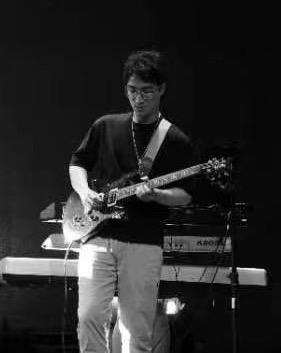
I am a rising third-year CS Ph.D. student at Stanford University, advised by Prof. Doug James. I work at the intersection of
simulation, graphics, and AI.
My current research focuses on physics-based simulation and learning.
More broadly, I am excited about building intelligent machines at scale that can understand, reason
about, and act in the physical world — machines with reasoning grounded in physical knowledge and
a thinking process that is traceable and verifiable, and that can ultimately assist people in the real
world.
I received both my B.E. in CS and my M.S. from the University of
Science and Technology of China (USTC), where I was very fortunate to be advised by Prof. Ligang Liu in the Graphics & Geometric Computing Lab.
I have also worked with Prof. Bo Ren at Nankai University and
Prof. Tao Du at the
Institute for Interdisciplinary Information Sciences (IIIS), Tsinghua University.
News
- Aug 2026 BubbleGym is accepted to SIGGRAPH Asia 2026! To appear in Kuala Lumpur, Malaysia, Dec 1–4, 2026.
- Jul 2026 Serving as a reviewer for ACM Transactions on Graphics (TOG).
- Mar 2026 Serving as a co-chair of the Stanford CS PhD Admit Weekend.
- Sep 2025 Serving as a co-chair of the Stanford Graphics Café.
- Sep 2025 Our paper on learned sparse approximate inverse preconditioners is accepted to NeurIPS 2025!
Selected Publications
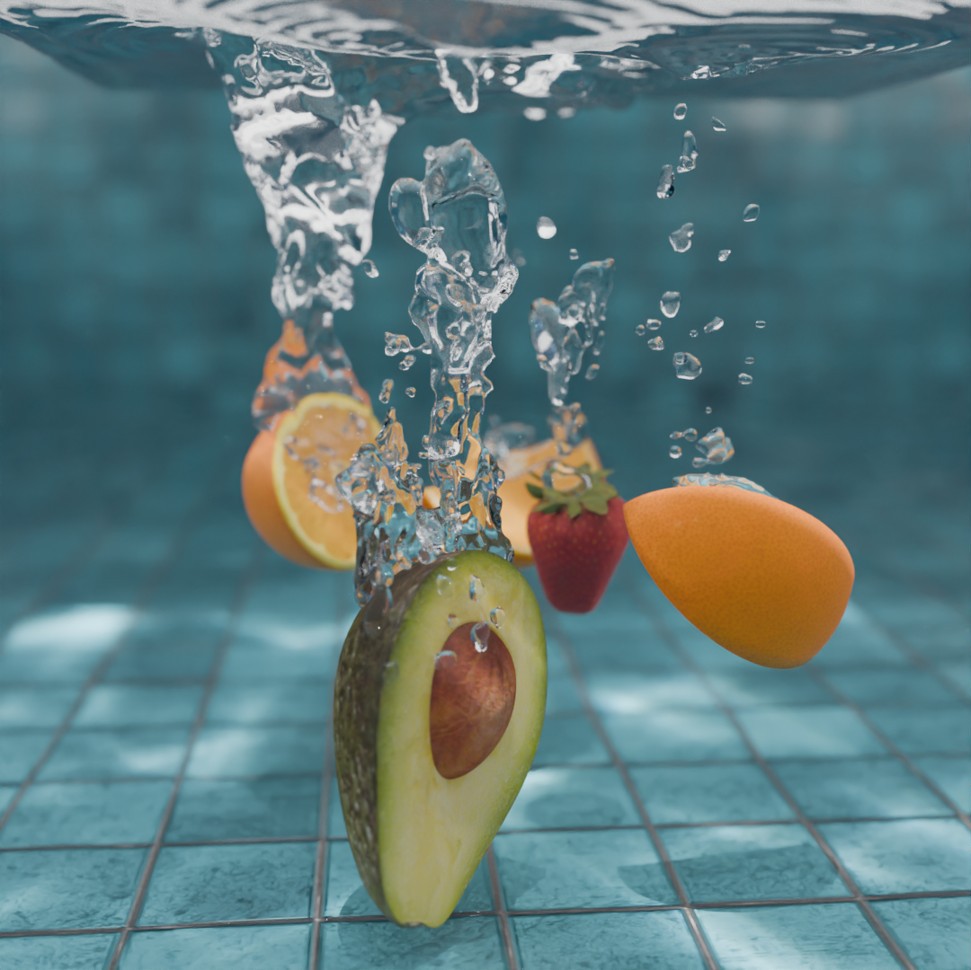
BubbleGym: A Practical Shape-to-Frequency Model for Acoustic Bubbles
Zhehao Li,
Kui Wu,
Wei Li,
Doug L. James
SIGGRAPH Asia 2026 Conference Papers
TL;DR: Bubbles make most of the sound of water, and their pitch depends partly on shape; we predict it from shape ~1400× faster than the exact solver, within 1% error.
Webpage Paper Code Publisher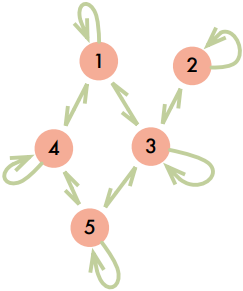
Learning Sparse Approximate Inverse Preconditioners for Conjugate Gradient Solvers on GPUs
Zherui Yang, Zhehao Li, Kangbo Lyu, Yixuan Li, Tao Du, Ligang Liu.
NeurIPS 2025
TL;DR: Solving large linear systems is the bottleneck in simulation and optimization; a graph neural network learns a GPU-friendly preconditioner that cuts solve time by 40–53%.
Webpage Paper Code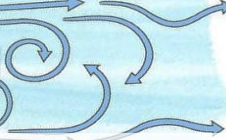
WindDancer: Understanding Acoustic Sensing under Ambient Airflow
Kuang Yuan, Dong Li, Hao Zhou, Zhehao Li, Lili Qiu,
Swarun Kumar, Jie Xiong
Proceedings of the ACM on Interactive,
Mobile, Wearable and Ubiquitous Technologies (IMWUT), 2025
TL;DR: Moving air changes the speed of sound, quietly degrading microphone-based sensing such as motion tracking; we measure and explain the effect.
Publisher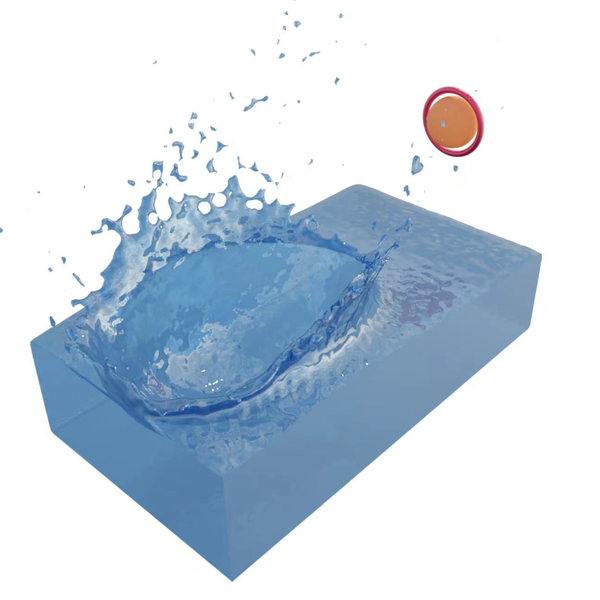
DiffFR: Differentiable SPH-based Fluid-Rigid Coupling for Rigid Body Control
Zhehao Li,
Qingyu Xu,
Xiaohan Ye,
Bo Ren,
Ligang Liu
ACM Transactions on Graphics (Proceedings
of SIGGRAPH Asia 2023)
TL;DR: A particle-based fluid-rigid coupling simulator you can get gradients from, optimizing a rigid body's motion in water up to 10× faster than gradient-free baselines.
Webpage Paper(15MB) Low-res Paper(2MB) Video Slides(59MB) Code Publisher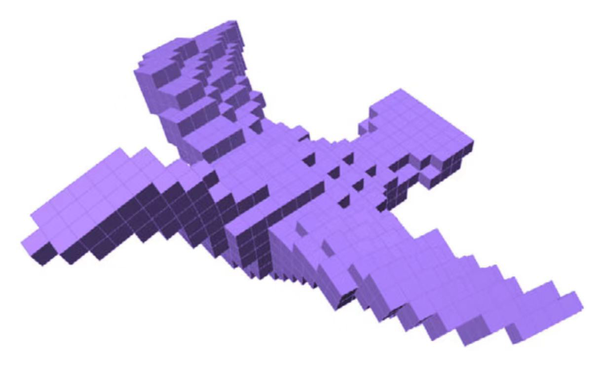
Numerical Coarsening with Neural Shape Functions
Ning Ni,
Qingyu Xu,
Zhehao Li,
Xiao-Ming Fu,
Ligang Liu
Computer Graphics
Forum, 2023
TL;DR: Simulate deformable objects on coarse meshes while keeping fine-scale behavior, by learning the coarse-to-fine mapping with geometric priors.
Webpage PaperService
- Reviewer, ACM Transactions on Graphics (TOG)
- Reviewer, ACM SIGGRAPH
- Co-chair, Stanford Graphics Café
- Co-chair, Stanford CS PhD Admission Weekend
Teaching
- Teaching Assistant, CS248B: Fundamentals of Computer Graphics: Animation and Simulation, Stanford University, 2025 & 2026, with Prof. Doug James and Prof. C. Karen Liu
- Teaching Assistant, CS348C: Computer Graphics: Animation and Simulation, Stanford University, 2025 & 2026, with Prof. Doug James
- Teaching Assistant, Computer Graphics, USTC, 2024, with Prof. Ligang Liu